
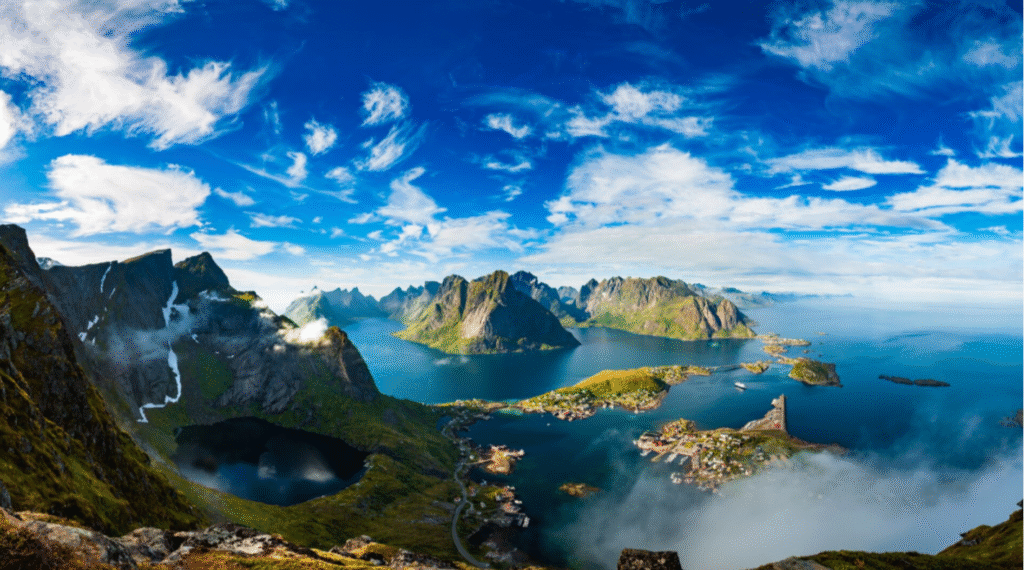
Scandinavia is a region of breathtaking landscapes, rich history, and vibrant cultures. Comprising Norway, Sweden, and Denmark, this part of Northern Europe offers a diverse range of experiences, from majestic fjords and scenic coastal roads to lively urban centers filled with art, design, and culinary excellence. Whether traveling through historic cities, exploring vast natural reserves, or enjoying local traditions, Scandinavia provides opportunities for adventure and relaxation throughout the year.
Best Time to Visit Scandinavia
Scandinavia experiences distinct seasons, each offering unique attractions. Summer (June to August) is ideal for outdoor activities, with long daylight hours, warm temperatures, and access to national parks. The Midnight Sun phenomenon in northern Norway and Sweden allows for nearly 24-hour daylight.
Autumn (September to November) brings colorful landscapes, fewer tourists, and cultural festivals. It is a good time to visit for those who prefer cooler temperatures and scenic road trips.
Winter (December to February) is perfect for seeing the Northern Lights, dog sledding, and skiing in Norway and Sweden. The region’s Christmas markets and cozy winter traditions make this a magical time to visit.
Spring (March to May) marks the transition from winter to summer, with blooming flowers and pleasant weather. It is a great time to explore cities and coastal areas before peak-season crowds arrive.

Exploring Norway
Oslo
Oslo, the capital of Norway, is a city known for its green spaces, cultural institutions, and modern architecture. The Viking Ship Museum showcases well-preserved Viking vessels, while the Fram Museum tells the story of polar expeditions. The Munch Museum displays the works of Edvard Munch, including The Scream. Visitors can enjoy scenic walks along the Oslofjord or visit the Akershus Fortress, a medieval stronghold with views over the harbor.

Bergen
Bergen is a coastal city known for its colorful wooden buildings and access to Norway’s fjords. The Bryggen Wharf, a UNESCO World Heritage Site, reflects the city’s maritime history. The Fløibanen Funicular provides a panoramic view of the city from Mount Fløyen. Nearby, the Nærøyfjord and Sognefjord offer boat tours through Norway’s stunning fjord landscapes.

Lofoten Islands
The Lofoten Islands are known for their dramatic peaks, fishing villages, and outdoor activities. The islands offer excellent opportunities for hiking, kayaking, and Northern Lights viewing in winter. Traditional rorbuer (fishermen’s cabins) provide accommodation with scenic waterfront views.

Tromsø
Tromsø is one of the best places in Norway to see the Northern Lights, especially from September to March. Visitors can experience dog sledding, whale watching, and reindeer safaris. The Arctic Cathedral and Polaria Museum showcase the region’s history and Arctic wildlife.

Exploring Sweden
Stockholm
Stockholm, built on 14 islands, combines history, nature, and modern design. Gamla Stan (Old Town) features cobbled streets, colorful buildings, and the Royal Palace. The Vasa Museum houses a 17th-century warship, and the ABBA Museum celebrates Sweden’s famous pop group. Visitors can take boat tours through the Stockholm Archipelago, which includes thousands of small islands.

Gothenburg
Gothenburg is a coastal city with a strong maritime heritage. The Liseberg Amusement Park and Universeum Science Center are popular attractions. The Haga district offers charming wooden houses and cafés serving cinnamon buns. Nearby, the Bohuslän coast is famous for its seafood and picturesque fishing villages.

Lapland
Swedish Lapland is known for its vast wilderness, home to Sámi culture, reindeer herding, and the Icehotel in Jukkasjärvi. The Abisko National Park is one of the best places to see the Northern Lights, with minimal light pollution and scenic landscapes.

Exploring Denmark
Copenhagen
Copenhagen, Denmark’s capital, blends historic landmarks with modern design. The Nyhavn waterfront is lined with colorful buildings and restaurants. The Tivoli Gardens, one of the world’s oldest amusement parks, is a must-visit attraction. The Little Mermaid statue, inspired by Hans Christian Andersen’s fairy tale, is a well-known landmark. The city’s bicycle-friendly streets make it easy to explore neighborhoods such as Christianshavn and Nørrebro.

Aarhus
Aarhus is Denmark’s second-largest city, known for its vibrant arts scene. The ARoS Aarhus Art Museum features a rooftop rainbow panorama with views over the city. The Den Gamle By (Old Town Museum) recreates life in Denmark from different historical periods. Aarhus is also a gateway to the Jutland peninsula, which offers coastal landscapes and Viking history.

Roskilde
Roskilde is home to the Viking Ship Museum, which displays original Viking longships recovered from the fjord. The Roskilde Cathedral, a UNESCO World Heritage Site, contains the tombs of Danish monarchs. The annual Roskilde Festival is one of Europe’s largest music festivals.

Outdoor Adventures in Scandinavia
Hiking and National Parks
Scandinavia has a variety of national parks and hiking trails. Norway’s Trolltunga, Preikestolen, and Kjerag offer dramatic cliffside views. Sweden’s Kungsleden Trail and Denmark’s Mols Bjerge National Park provide scenic landscapes for outdoor enthusiasts.

Fjords and Coastal Routes
Norway’s Geirangerfjord and Hardangerfjord offer boat cruises through stunning landscapes. Denmark’s Bornholm Island and Sweden’s Gotland provide scenic coastal experiences.

Wildlife and Arctic Experiences
Scandinavia is home to diverse wildlife, including moose, reindeer, puffins, and whales. Whale-watching tours operate in Tromsø and the Lofoten Islands, while reindeer safaris and Sámi cultural experiences are available in Swedish and Norwegian Lapland.

Scandinavian Cuisine
Norwegian Specialties
- Rakfisk (fermented trout)
- Klippfisk (dried cod)
- Brunost (brown cheese)
Swedish Specialties
- Köttbullar (Swedish meatballs)
- Smörgåsbord (buffet-style meal)
- Surströmming (fermented herring)
Danish Specialties
- Smørrebrød (open-faced sandwiches)
- Flæskesteg (roast pork)
- Æbleskiver (Danish pancakes)

Practical Tips for Traveling in Scandinavia
- Currency: Norway uses Norwegian Krone (NOK), Sweden uses Swedish Krona (SEK), and Denmark uses Danish Krone (DKK). Credit cards are widely accepted.
- Language: Norwegian, Swedish, and Danish are spoken, but English is widely understood.
- Transport: Scandinavia has efficient public transport, including trains, buses, and ferries. City bike rentals are popular.
- Weather: Packing layers is essential due to changing weather conditions. Waterproof gear is recommended for outdoor activities.