
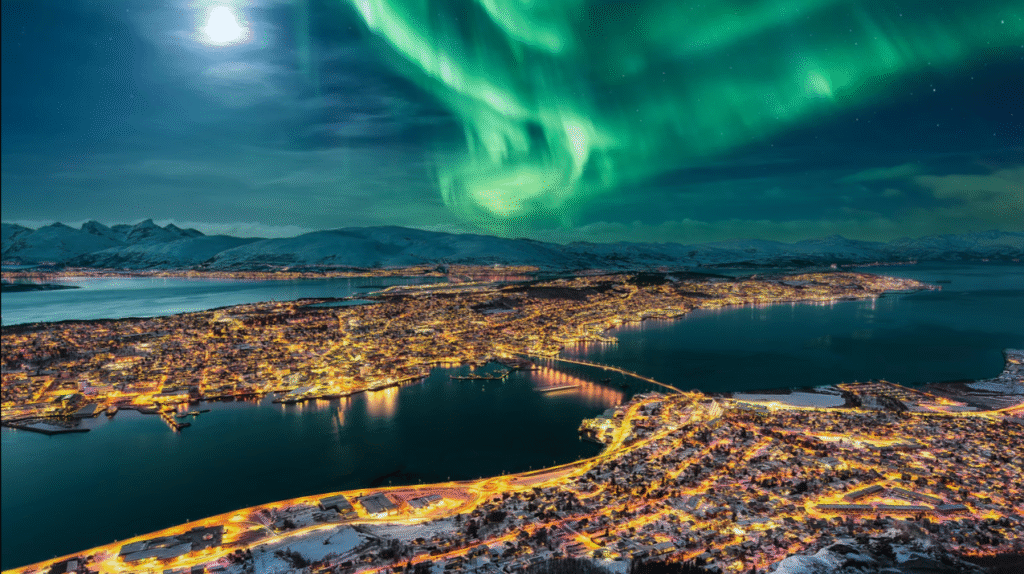
Where to See the Northern Lights
The Northern Lights, or aurora borealis, are one of the most spectacular natural phenomena, creating colorful displays in the night sky. These lights occur when charged particles from the sun collide with the Earth’s atmosphere, producing glowing green, red, purple, and blue patterns that dance across the sky. Observing this phenomenon requires visiting high-latitude regions with dark skies and minimal light pollution. This guide explores the best locations to witness the Northern Lights, along with essential tips for a successful viewing experience.

Best Time to See the Northern Lights
The best time to see the Northern Lights is between September and March, when the nights are long and the skies are dark. The peak period occurs between December and February, when clear, cold weather provides optimal conditions. Although the aurora can appear at any time of night, it is most active between 10 PM and 2 AM.
Darkness is essential for visibility, so avoiding cities and artificial lights increases the chances of seeing a vivid display. Checking solar activity forecasts can also help determine the best nights for viewing, as the aurora is influenced by geomagnetic activity.
Best Places to See the Northern Lights
1. Tromsø, Norway
Tromsø, located in northern Norway, is one of the most accessible places to see the Northern Lights. The city sits within the Aurora Oval, a zone with frequent auroral activity. Its location above the Arctic Circle ensures long, dark nights during winter.
Popular viewing locations around Tromsø include:
- Prestvannet Lake – A short distance from the city center, providing a dark environment.
- Ersfjordbotn – A fjord with reflective wateeal for unobstructedrs that enhance the visual impact of the aurora.
- Sommarøy – A coastal area with open skies, id views.
Visitors can take guided tours that travel into the countryside, away from light pollution, or opt for dog sledding and reindeer safaris combined with aurora watching.
2. Abisko, Sweden
Abisko, in Swedish Lapland, is known for having one of the clearest skies in the aurora belt due to its microclimate. The Abisko National Park provides an excellent setting for watching the lights without interference from artificial lights.
The Aurora Sky Station, located on a mountain, offers an elevated viewpoint with reduced cloud cover. Visitors can reach the station by chairlift and enjoy an unobstructed night sky.
3. Rovaniemi, Finland
Rovaniemi, the capital of Finnish Lapland, offers both Northern Lights viewing and unique winter experiences. The Arctic Circle location provides excellent conditions for aurora activity. Popular spots for aurora watching include:
- Ounasvaara Hill – A high-altitude area with good visibility.
- Santa Claus Village – A popular tourist area with open spaces for aurora sightings.
Several glass-roofed accommodations, such as glass igloos and cabins, allow visitors to watch the aurora from the comfort of their rooms.
4. Reykjavik & Thingvellir National Park, Iceland
Iceland’s geographic position makes it an ideal destination for aurora viewing. While Reykjavik has some light pollution, a short drive to Thingvellir National Park or Grotta Lighthouse provides darker skies for better visibility.
Popular locations for Northern Lights tours include:
- Jökulsárlón Glacier Lagoon – An area where the aurora reflects on icy waters.
- Kirkjufell Mountain – A famous spot for aurora photography.
Fairbanks, Alaska, USA
Fairbanks, located in the heart of Alaska, experiences auroral activity on most clear nights between August and April. The city serves as a base for excursions into the wilderness, where viewing conditions improve.
Recommended locations near Fairbanks include:
- Murphy Dome – A high-altitude area with a panoramic view of the sky.
- Chena Hot Springs – A popular location where visitors can soak in warm mineral waters while watching the aurora.
The Geophysical Institute at the University of Alaska provides real-time aurora forecasts to help plan viewing trips.
Yellowknife, Canada
Yellowknife, in Canada’s Northwest Territories, is considered one of the best places in North America for aurora viewing. The flat terrain and clear skies create ideal conditions.
Popular locations for viewing include:
- Aurora Village – A dedicated aurora-watching lodge with heated facilities.
- Prosperous Lake – A remote area away from city lights.
The city’s cold, dry climate results in frequent clear nights, increasing the likelihood of witnessing the Northern Lights.
How to Photograph the Northern Lights
Capturing the Northern Lights requires the right camera settings and conditions:
- Use a tripod – A stable base prevents blurring due to long exposure times.
- Adjust camera settings – Set the ISO between 800 and 3200, use a wide aperture (f/2.8 or lower), and set a long exposure time (5-30 seconds).
- Use manual focus – Autofocus may struggle in dark conditions, so adjusting focus manually improves clarity.
- Avoid artificial light sources – Shooting in dark areas without city lights enhances photo quality.
Additional Tips for Viewing the Northern Lights
- Monitor aurora forecasts – Websites such as the NOAA Space Weather Prediction Center and Aurora Service provide real-time updates.
- Check the weather – Clear skies are essential, as cloud cover can obstruct visibility.
- Dress for extreme cold – Temperatures in aurora zones can drop significantly, requiring insulated clothing.
- Stay away from city lights – Remote areas provide darker skies for a clearer aurora display.
- Be patient – The aurora may not appear immediately, so waiting and watching for several hours increases the chances of seeing it.
