
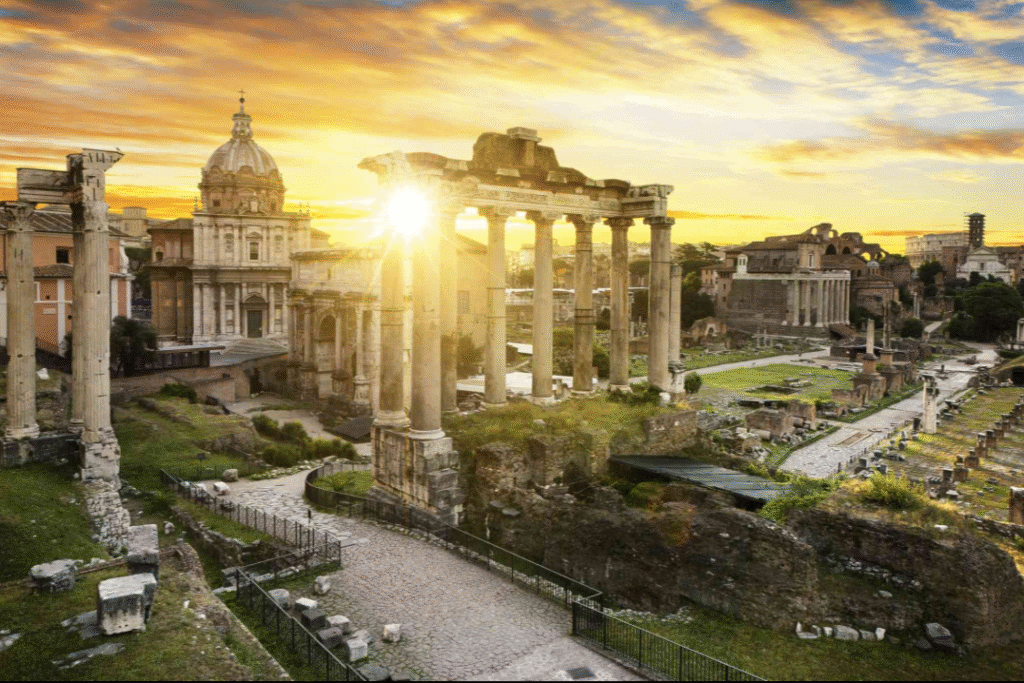
Europe is home to some of the most significant ancient ruins, offering a glimpse into the past through well-preserved structures, archaeological sites, and remnants of lost civilizations. From Roman amphitheaters to prehistoric stone circles, these sites reveal the engineering, artistry, and cultural achievements of past societies. Whether exploring grand temples, fortified cities, or hidden ruins in the countryside, each location tells a unique story of human history.
The Colosseum – Rome, Italy
The Colosseum is one of the most recognizable ancient structures, standing as a symbol of Roman engineering and entertainment. Built in the 1st century AD, this massive amphitheater hosted gladiatorial contests, public spectacles, and theatrical performances.
- The arena floor, where gladiators once fought.
- The underground hypogeum, a network of tunnels and chambers.
- The upper levels, offering views of the Roman Forum and the city.
Visitors can explore the structure through guided tours, which provide insight into the construction, history, and cultural significance of the amphitheater.

Pompeii – Italy
Pompeii was a thriving Roman city until it was buried under volcanic ash during the eruption of Mount Vesuvius in 79 AD. The preserved ruins provide a detailed view of daily life in an ancient Roman settlement.
- The Forum, a central gathering place with administrative and religious buildings.
- The House of the Vettii, featuring well-preserved frescoes.
- The Amphitheater of Pompeii, one of the oldest surviving Roman amphitheaters.
Walking through the streets of Pompeii reveals homes, markets, baths, and even graffiti left behind by the city’s inhabitants.

Stonehenge – England
Stonehenge is a prehistoric monument consisting of massive standing stones arranged in a circular formation. Built between 3000 and 2000 BC, its exact purpose remains unknown, though it is believed to have been used for religious or astronomical purposes.
- The inner and outer stone circles, composed of massive sarsen and bluestones.
- The Heel Stone, aligned with the sunrise during the summer solstice.
- The nearby Avenue and Cursus, ancient processional pathways.
Visitors can explore the site and learn about its construction through the visitor center, which includes artifacts and reconstructions of Neolithic life.

Acropolis of Athens – Greece
The Acropolis of Athens is a hilltop complex featuring some of the most important structures of ancient Greece. Built in the 5th century BC, it served as a religious and cultural center dedicated to the goddess Athena.
- The Parthenon, a temple known for its Doric columns and intricate sculptures.
- The Erechtheion, featuring the famous Caryatid statues.
- The Propylaea, the grand entrance to the Acropolis.
From the hill, visitors can enjoy panoramic views of Athens while walking among the ruins of one of the most influential civilizations in history.\

Knossos – Crete, Greece
Knossos was the center of Minoan civilization, dating back to the Bronze Age. This palace complex, located on the island of Crete, is considered the oldest city in Europe.
- The Throne Room, with its ceremonial seat and frescoes.
- The Grand Staircase, an impressive architectural feature.
- The frescoes of the Prince of the Lilies, depicting Minoan art and culture.
Archaeologists believe Knossos was a political, religious, and economic hub, and visitors can explore its labyrinth-like structure and legendary connection to the myth of the Minotaur.

Ephesus – Turkey
Ephesus was an important Greek and Roman city, known for its well-preserved ruins and impressive monuments. It was once a major trade and religious center, home to the Temple of Artemis, one of the Seven Wonders of the Ancient World.
- The Library of Celsus, an ornate two-story façade that once housed thousands of scrolls.
- The Great Theater, capable of holding 25,000 spectators.
- The Temple of Hadrian, featuring intricate reliefs and statues.
The site provides a glimpse into life in an ancient metropolis, with streets lined with marble columns and public baths.

Herculaneum – Italy
Herculaneum, like Pompeii, was buried by the eruption of Mount Vesuvius in 79 AD. However, its ruins are even better preserved, with intact wooden structures, frescoes, and mosaics.
- The House of the Deer, featuring elegant paintings and furniture.
- The Thermopolium, an ancient food stall with preserved jars and counters.
- The Basilica, a grand civic building used for public gatherings.
Walking through Herculaneum offers an intimate look at Roman life, with streets and homes frozen in time.

Roman Baths – Bath, England
The Roman Baths in the city of Bath were built around natural hot springs and served as a major center for bathing and socializing. The site remains one of the best-preserved examples of Roman public baths.
- The Great Bath, a large pool fed by thermal springs.
- The Temple of Sulis Minerva, dedicated to a local Roman deity.
- The underground sacred spring, where offerings were thrown into the water.
Visitors can explore the baths and learn about Roman engineering and hygiene practices through museum exhibits.

Tarragona Amphitheater – Spain
The Tarragona Amphitheater is an impressive Roman structure overlooking the Mediterranean Sea. It was used for gladiator contests, public executions, and other spectacles.
- The seaside setting, offering stunning coastal views.
- The remains of a Visigothic church, built on top of the amphitheater.
- The Roman Circus, part of a larger archaeological complex in Tarragona.
The city of Tarragona has several Roman sites, making it a great destination for history enthusiasts.

Delphi – Greece
Delphi was one of the most important religious centers of ancient Greece, home to the Oracle of Apollo. Pilgrims from across the Greek world traveled here to seek prophecies.
- The Temple of Apollo, where the oracle delivered messages from the gods.
- The Theater of Delphi, offering views of Mount Parnassus.
- The Stadium, used for athletic competitions during the Pythian Games.
Visitors can walk along the Sacred Way, a path lined with statues and treasuries, leading to the temple ruins.

Carnac Stones – France
The Carnac Stones are one of the largest collections of prehistoric standing stones, dating back over 7,000 years. Located in Brittany, this site consists of more than 3,000 megaliths, arranged in rows and formations.
- The Ménec Alignment, with hundreds of standing stones in parallel rows.
- The Dolmens and Tumuli, burial chambers from ancient societies.
- The Kermario Alignment, featuring some of the largest megaliths.
Archaeologists continue to study the purpose of these stones, believed to be linked to religious or astronomical practices.
