
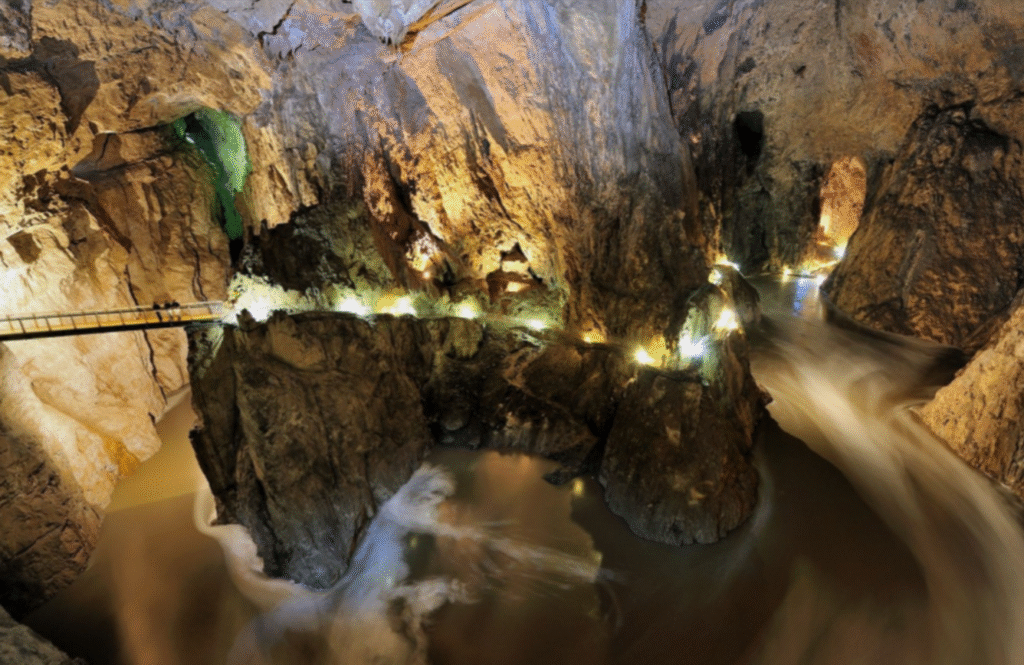
Beneath the surface of Europe’s cities and landscapes, hidden underground attractions reveal fascinating histories, architectural wonders, and natural formations. These subterranean sites include ancient tunnels, hidden catacombs, underground lakes, and abandoned bunkers. From secret wartime shelters to mysterious cave systems, these attractions provide an opportunity to explore lesser-known parts of history and nature.
Wieliczka Salt Mine – Poland
The Wieliczka Salt Mine, near Kraków, is one of the most extraordinary underground attractions, with tunnels, chapels, and sculptures carved entirely out of salt. The mine has been in operation since the 13th century, producing salt while also serving as a place of worship and refuge.
- Chapel of St. Kinga, a massive underground church adorned with salt chandeliers and intricate carvings.
- Underground salt lakes, reflecting the light of the carved rock formations.
- Labyrinth of tunnels, stretching over 300 kilometers, with only a small section open to visitors.
The mine’s temperature remains cool year-round, making it a refreshing retreat while offering a deep dive into history and craftsmanship.

Catacombs of Paris – France
The Catacombs of Paris form an underground ossuary that houses the remains of over six million people. Created in the late 18th century to address the city’s overcrowded cemeteries, this vast network of tunnels is filled with carefully arranged human bones.
- The Skull and Bone Walls, where bones are meticulously stacked in patterns.
- The Port-Mahon Carvings, relief sculptures carved by a quarry worker before the catacombs became an ossuary.
- Hidden tunnels and chambers, extending for hundreds of kilometers beneath the city.
Visitors can explore a small portion of the catacombs, entering through a discrete entrance near Denfert-Rochereau.

Derinkuyu Underground City – Turkey
Derinkuyu Underground City, located in Cappadocia, is an ancient multi-level city carved deep into the rock. Thought to have been used by early Christians as a refuge, this underground settlement could house thousands of people.
- Narrow tunnels and passageways, connecting homes, churches, and communal spaces.
- Stone doors, designed to be rolled into place to block intruders.
- Ventilation shafts, providing fresh air deep underground.
The city descends multiple levels, with only a portion open to visitors, revealing the ingenuity of ancient underground architecture.

Churchill War Rooms – London, England
The Churchill War Rooms in London served as the underground headquarters for the British government during World War II. These bunkers housed military leaders and strategists, including Winston Churchill, as they planned wartime operations.
- The Map Room, filled with original war maps and intelligence reports.
- Churchill’s personal quarters, preserved as they were during the war.
- Secret telephone room, where Churchill communicated with world leaders.
Visitors can explore the preserved rooms and learn about Britain’s wartime efforts through interactive exhibits.

Edinburgh Vaults – Scotland
Beneath the streets of Edinburgh, the Edinburgh Vaults form a network of chambers that were once used as workshops, storage spaces, and even homes for the city’s poorest residents. Over time, the vaults gained a reputation for being haunted.
- Dark, narrow tunnels, creating an eerie atmosphere.
- Artifacts from the 18th century, including old tools and pottery.
- Ghost stories and legends, adding to the mystery of the vaults.
Many tours focus on the vaults’ haunted history, making this an intriguing stop for those interested in the paranormal.

Basilica Cistern – Istanbul, Turkey
The Basilica Cistern is a massive underground water reservoir built by the Byzantine Empire in the 6th century. Located beneath Istanbul, it features towering columns and atmospheric lighting.
- Medusa Head Columns, repurposed from ancient temples.
- The vast underground chamber, holding thousands of liters of water.
- The eerie ambiance, with soft lighting and reflections on the water.
Visitors walk on elevated platforms above the water, experiencing the grandeur of this subterranean marvel.

Salina Turda – Romania
Salina Turda is a former salt mine that has been transformed into an underground amusement park. Located in Transylvania, the mine features massive caverns and a subterranean lake.
- The underground Ferris wheel, offering panoramic views of the cavern.
- Rowboat rides on the saltwater lake, inside the mine.
- The Rudolf Hall, a chamber with high ceilings and salt-covered walls.
The unique combination of history and entertainment makes this an exciting underground attraction.

Wielandstollen – Germany
The Wielandstollen is an underground mine in the Harz Mountains that dates back to medieval times. It was once a silver and copper mine, later repurposed as an underground workshop during World War II.
- Old mining tunnels, with original tools and wooden reinforcements.
- Interactive exhibits, showing the mine’s history through the centuries.
- Underground railways, used to transport materials.
Guided tours provide insights into the daily lives of miners and the historical significance of the site.

Tar Tunnel – Wales
The Tar Tunnel, located in Ironbridge Gorge, is an underground passage where natural bitumen seeps through the rock walls. Originally intended as a canal tunnel, the discovery of the tar led to its use in industrial production.
- Seeping tar walls, creating an unusual underground environment.
- Narrow passageways, carved through the rock.
- Historical significance, linked to the Industrial Revolution.
Visitors can walk through the tunnel and learn about its connection to Britain’s industrial heritage.

Smocza Jama – Poland
Smocza Jama, or the Dragon’s Den, is a cave beneath Wawel Castle in Kraków. According to legend, a dragon once lived in the cave before being defeated by a clever shoemaker.
- The dragon statue, breathing fire at the cave’s entrance.
- The winding cave path, leading to the Vistula River.
- Legends and folklore, associated with Kraków’s history.
The cave provides a short but fascinating exploration of Poland’s mythical past.
